5shairfactory
11 posts
Jul 12, 2026
8:36 PM

|
When customers or business owners begin researching hair products, one of the first questions they ask is: how much are hair extensions? The answer can vary widely because hair extensions are not one single product. They come in different qualities, lengths, textures, weights, and application methods.

See Article Details At: how much are hair extensions
In the hair factory field, pricing is usually more flexible than retail pricing. A factory can offer bulk prices, custom production, and private label options for salons, wholesalers, and hair vendors. However, the final cost still depends on the exact specifications of the order.
View At: How Much Are Hair Extensions? A Quick Guide
Understanding the Basic Price Range
Hair extensions may be affordable or expensive depending on the material. Synthetic hair is usually the lowest-cost option, but it does not offer the same natural look and durability as human hair. Human hair extensions are more valuable because they blend better with natural hair, can be styled more easily, and usually last longer with proper care.
See More At: How Much Are Hair Extensions? A Complete Guide from a Hair Factory Perspective
At a hair factory, products are often priced by bundle, kilogram, piece, or order quantity. A bundle is commonly around 100 grams, but factories can produce different weights based on buyer requirements. Larger orders normally receive better unit prices because production and handling costs are spread across more products.
Hair Quality Is the Biggest Factor
Quality has a major impact on price. Low-grade mixed hair may look attractive at first, but it can become dry, tangled, or weak after washing. Remy hair is more expensive because the cuticles are aligned in one direction, helping the hair stay smooth.
Virgin hair and raw hair are usually premium choices. Raw human hair is especially popular among professional buyers because it has not been heavily processed. It can often be dyed, bleached, curled, or straightened more successfully than lower-quality hair. For this reason, raw Vietnamese hair, Cambodian hair, Indian hair, and Burmese hair usually have higher market value.
Length Makes a Big Difference
Long hair costs more than short hair. This is because long, healthy strands are harder to collect and sort. For example, a 10-inch bundle will normally be cheaper than a 26-inch bundle of the same quality and texture.
Long hair also requires better raw material. If the ends are thin, the finished extensions may not look full. Buyers who want long hair with thick ends often choose double drawn or super double drawn hair, which increases the price but creates a more luxurious result.
Texture, Color, and Production Method
Texture also affects the final cost. Natural straight hair is often less expensive because it requires less processing. Body wave, deep wave, curly, kinky curly, and water wave textures may cost more because they need extra work to create or maintain the pattern.
Coloring can also add cost. Natural black or brown hair is usually simpler to supply, while blonde, piano color, ombre, highlight, or custom color hair requires additional processing and careful quality control. If buyers want hair that remains soft after bleaching or coloring, they should expect to pay for better raw material.
Different Types of Extensions Have Different Costs
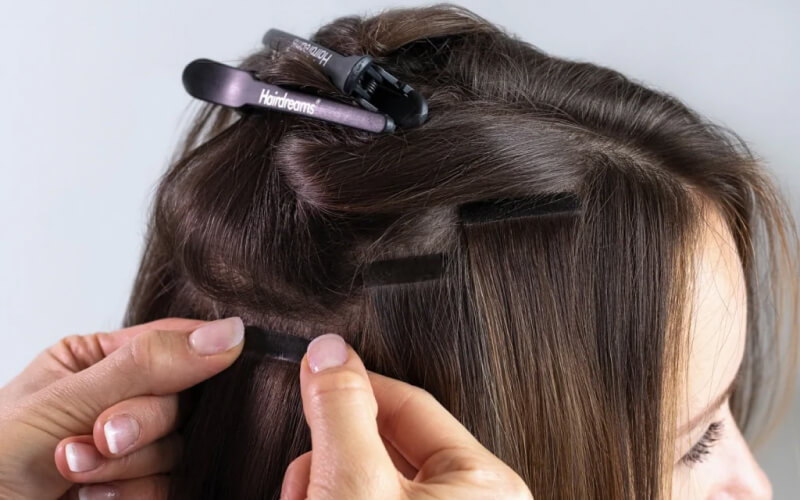
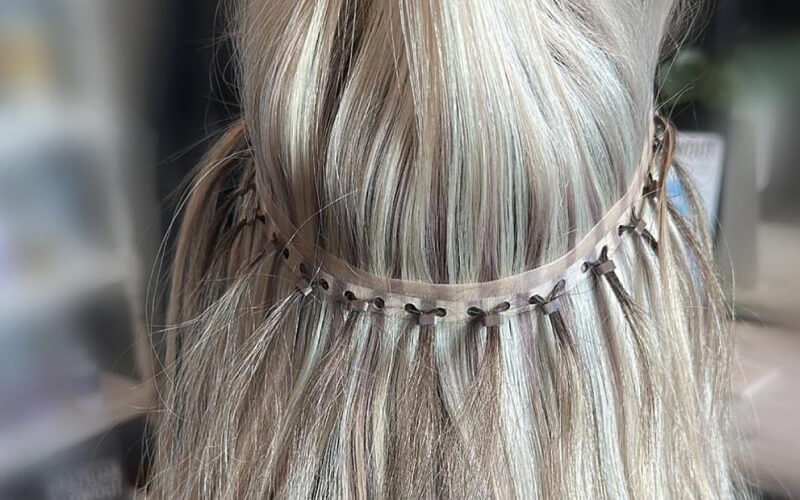
Bulk hair and machine weft hair are usually more basic products. Tape-in extensions, clip-in extensions, keratin tips, micro links, hand-tied wefts, closures, frontals, and wigs normally cost more because they require more materials and labor.
For example, a lace frontal needs lace, hand ventilation, careful knot work, and skilled inspection. A clip-in set needs clips, sewing, packaging, and ready-to-use styling. These extra steps increase the factory price.
Why Factory Buying Can Save Money
Retail customers often pay more because the product price includes branding, advertising, packaging, store costs, and customer service. Business buyers who purchase directly from a factory can usually get a lower base price and more customization options.
A hair factory can also help buyers create consistent products for their own brand. This is important for salons and vendors who want repeat customers and stable product quality.
Tips Before Asking for a Quote
- Know the exact hair type you need.
- Choose the length, texture, color, and weight.
- Decide the quality level and drawn level.
- Prepare your order quantity.
- Ask for sample testing before a large order.
Conclusion
Hair extension prices depend on many details, including quality, length, texture, color, weight, and product type. In the hair factory market, buyers can often get better pricing by ordering in bulk and communicating clear requirements.
The cheapest extensions are not always the best choice. For long-term business growth, it is better to choose stable quality, honest communication, and products that customers will trust and repurchase. 5S Hair Factory is the first Vietnamese hair factory, proudly supplying 100% high-quality Vietnamese human hair extensions. With a wide selection of products including virgin hair extensions, Remy hair extensions, clip-in extensions, and tip/tape extensions, 5S Hair Factory has become a trusted brand in the international market. The company mainly focuses on European hair extension products and exports to wholesale hair sellers in Brazil, Russia, the United Kingdom, the United States, and many other countries.
#how_much_are_hair_extensions, #howmucharehairextensions, #5S_Hair_Factory, #5SHairFactory, #5S_Hair_Factory
|